
THEMA is more than just a classification system—it’s the shared language that unites the global book trade, enabling publishers, booksellers, and distributors to communicate clearly and efficiently about a book’s subject, theme, or genre, across languages and cultures. In this guest blog, Chris Saynor, a seasoned expert from EDItEUR (the international standards body behind THEMA and ONIX), shares his insights. With a career spanning bookselling at Waterstones, Shakespeare & Co, and W.H. Smith Paris, as well as metadata solutions, Chris brings a wealth of practical experience to the conversation. Read more below.
This year I had the pleasure of attending my first RISE Bookselling conference in Verona. As a former bookseller, it was a joy to be surrounded by people who care deeply about books, readers, and the trade that connects them. The programme was rich, the conversations lively, and I even had the chance to speak on a panel introducing Thema — a standard that’s quietly becoming essential across the global book industry.
Thema is an international, multilingual classification system designed for the book trade. In simple terms, it gives publishers a consistent way to describe what a book is about, so booksellers can quickly understand its subject, theme, or genre and shelve it accordingly. Think of it as a shared language that helps everyone in the supply chain communicate more clearly.
Why Thema matters
For booksellers, Thema is meant to make life easier. By assigning Thema codes, publishers can give you more detailed information about the content of their titles — helping you find the books you want to stock, the ones your customers are asking for, and even the ones they don’t yet know they want yet!
How Thema works
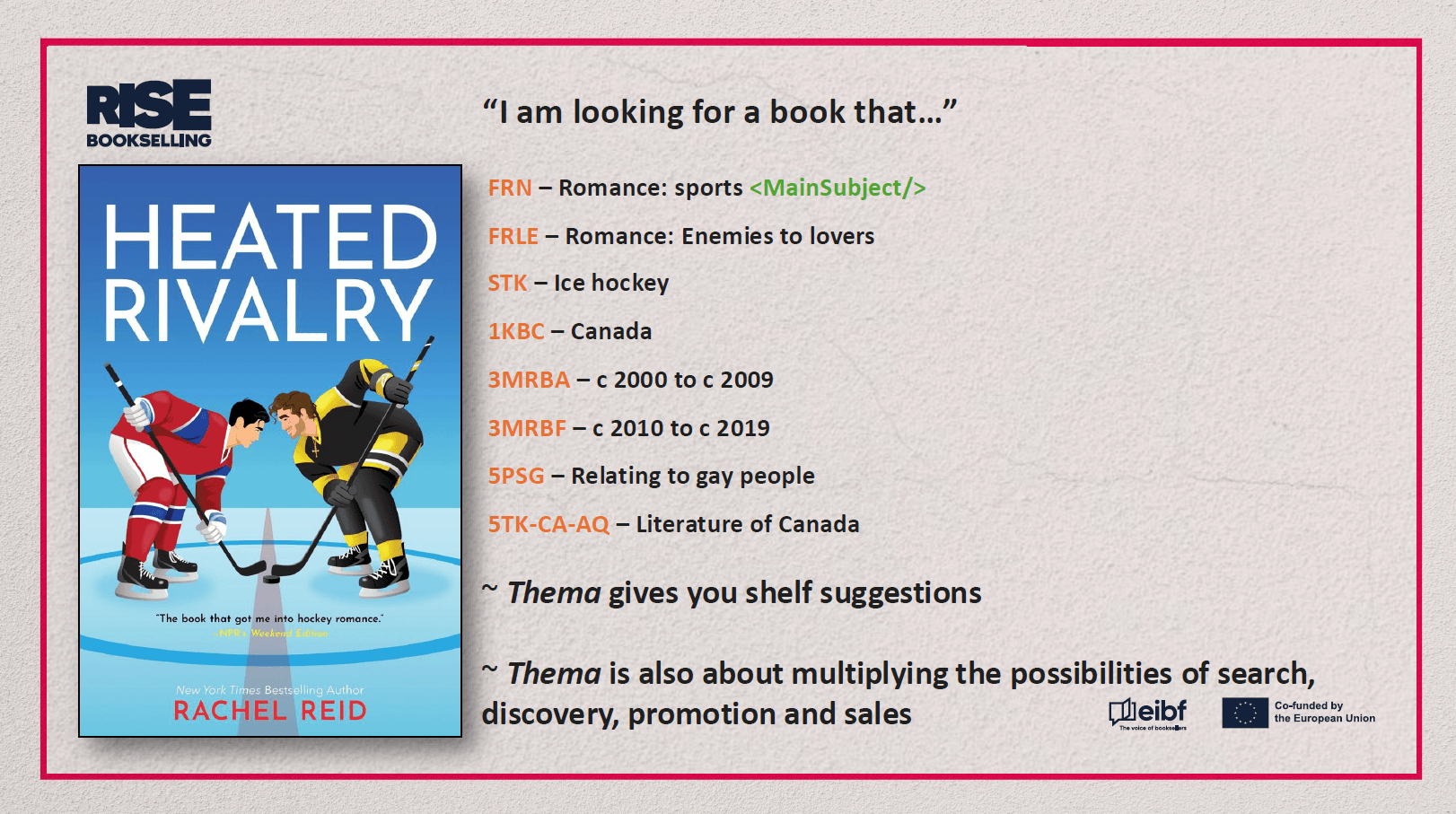
Thema operates on two levels:
1. A single code for the main concept
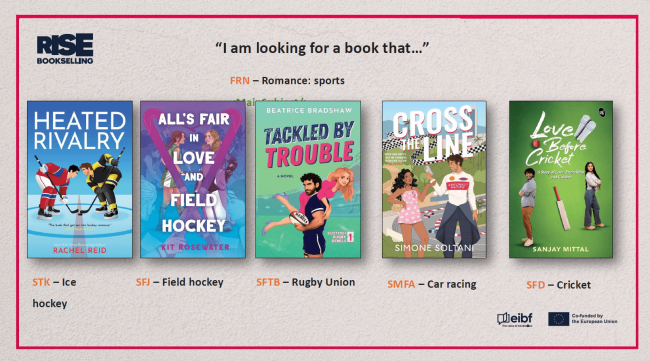
This is the simplest level: one code that represents the core subject. For example, FRN is the code for Romance: sports.
2. Multiple codes for richer detail
Thema also supports a post‑coordinated approach, meaning publishers can add additional codes to describe specific elements of the story. This is where Thema becomes genuinely powerful for booksellers.
If a customer has already devoured all your ice hockey romance titles (that is books coded FRN + STK) you might suggest they try cricket romance, and you’d look for codes FRN + SFD. If they’re after romance featuring found families, that’s any FR* + 5PHG. And if someone wants a general novel set in a bookshop, you’d look for FBA + FXC.
Thema is made up of subject categories and qualifiers, and the qualifiers are a very powerful tool for adding that extra level of detail.
Even the most knowledgeable bookseller can’t know every book’s content, but Thema can help you find these titles
Growing adoption
Not every publisher uses Thema yet, and not all use it well, but adoption is increasing and the quality of coding is improving.
There are currently 28 full or partial translations available, and more are on the way. If your language isn’t yet covered and you’d like to help create a translation, please feel free to get in touch: chris@editeur.org.
A tool worth asking about
If you’re a bookseller, it’s worth asking your publishers, distributors, data providers, or bookshop system suppliers whether they’re using Thema, and if not, why not? It has the potential to be a powerful tool for discovering titles, guiding customers, and enriching your shelves with books you might otherwise miss.
For more about Thema have a look at the resources on EDItEUR’s website: https://www.editeur.org/151/Thema/
| Attachment | Size |
|---|---|
| RISE_Thema_slides_examples.pdf | 1.66 MB |